

Q&A with SACHA TEBOUL
We caught up with Sacha Teboul, a Paris-born filmmaker and visual artist whose work spans cinema, photography and installation. A graduate of La Fémis, his films have screened at festivals including IndieLisboa, Busan and Brive. He is currently developing his first feature film, supported by France’s CNC.
His latest short film, Kavalyé O Dam, will screen as part of New York Film Week’s 2026 Shorts Program on Wednesday, November 18, at 5:00 PM at Cobble Hill Cinemas in Brooklyn.
Your film explores an extraordinary idea: even when memories seem to disappear, music can bring them back to life. Where did the original inspiration for the film come from?
The screenplay was written by Aodren Buart, who drew heavily on his own personal experience. It immediately resonated with mine. My grandmother is 96 years old and can barely remember anything anymore. But whenever I start singing, she begins to sing along with me, and suddenly all the love and affection she has for me comes pouring out again, without any barriers.
Music and dance appear to play an essential role in your film. How did you choose the music, and what does it communicate that dialogue alone couldn’t express?
The music was already there from the very beginning, when the screenplay was being written. Its strength lies in the different layers of time and history it carries within it. These biguines have a long history, one that immediately connects Guadeloupe to its roots. They also embody the freedom to reclaim a colonial history and the dances of the European aristocracy, transforming them into something entirely different, something of one’s own.
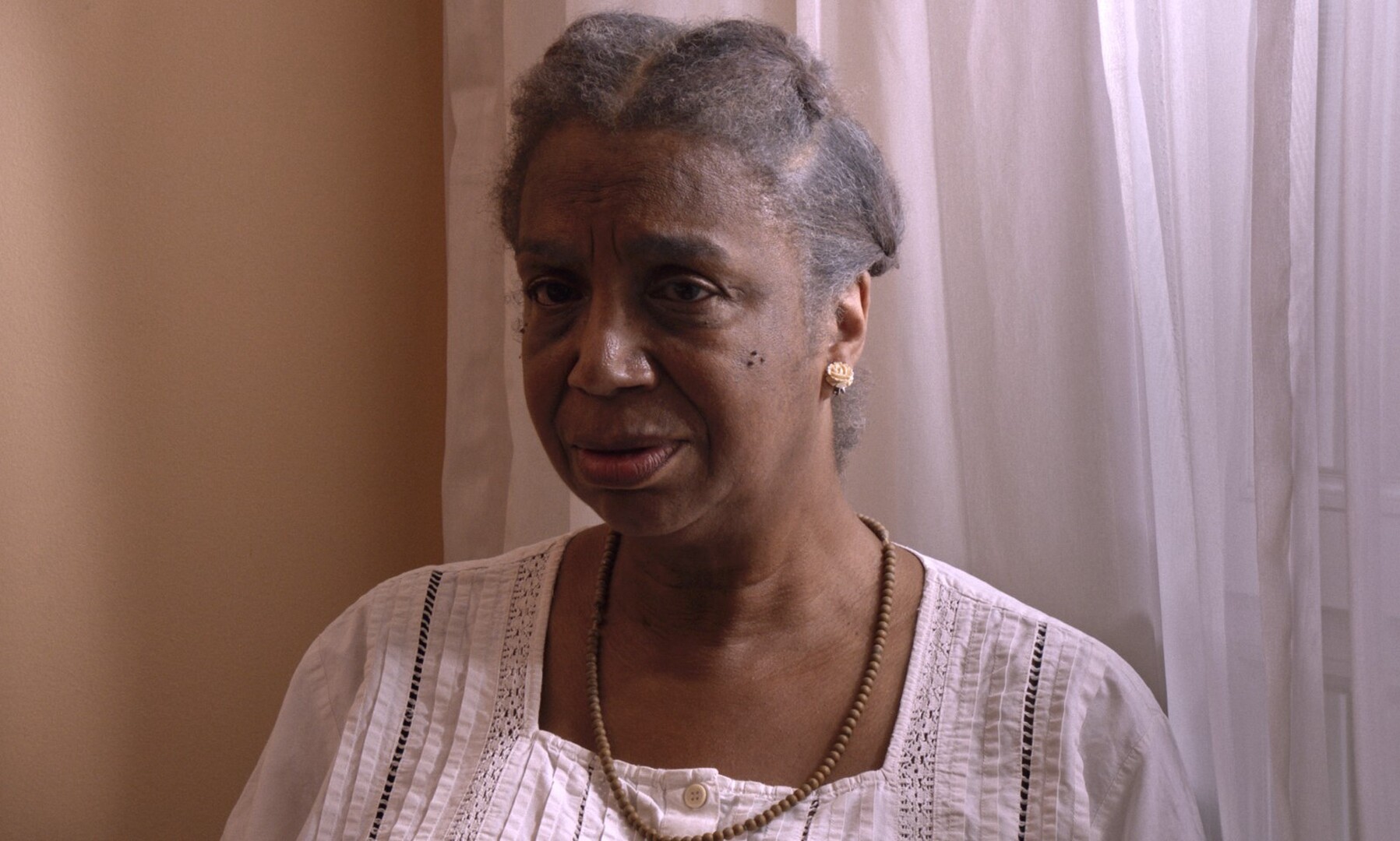
Through a deeply personal love story, your film also touches on the Algerian War and the wider consequences of colonial history. Why was it important for you to approach this history through an intimate narrative?
That was precisely the strength of Aodren’s screenplay. Without making it the centre of the story, or turning the film into a manifesto, this deeply intimate narrative touches on something much larger, something that is sometimes still taboo, and that felt important to bring back to the surface.
That’s also why we chose to include an archival image at the end of the film, as a silent tribute to all those men who were sent to fight in a foreign land, against people who, in many ways, were more like them than different from them.
If you could step inside one memory from your own life and experience it again, which would it be?
Playing marbles in the schoolyard when I was a child.
Can you tell us about an artist whose work you deeply admire but who, in your opinion, hasn’t received the attention they deserve?
To stay within the spirit of the film, I would say the great Guadeloupean filmmaker Guy Deslauriers, particularly his film Passage du milieu (The Middle Passage).
Is there a film you’ve discovered recently that you immediately wanted to recommend to everyone around you?
Notre Salut, by Emmanuel Marre. I was struck by the boldness of its direction, particularly the way it films what is usually left outside the frame of an archival image: a fragment of conversation, a character lingering in a corner. I also loved the strange, floating sense of time created by the camera, the tone, and the anachronisms.
Where’s your favourite place to watch a movie? Do you have a cinema or screening experience that holds a special place in your heart?
When I was living in Chile, there was a cinema inside an old, slightly run-down theatre that offered incredible screenings for just one euro. It was a beautiful and deeply inspiring place.
If this interview had closing credits, what song or piece of music would you choose to play over them, and why?
St. James Infirmary by Louis Armstrong. Like the ending of Abbas Kiarostami’s Taste of Cherry, a song that somehow brings us back to life.